



When sourcing components for a full suspended ceiling system, global construction buyers frequently struggle to distinguish various T-bar ceiling grid variants. As the core framework of every drop ceiling project, the T-bar grid defines the whole ceiling system installation, yet its structure, matching panels and supporting ceiling accessories vary widely between China’s domestic market, Middle East building projects and ASEAN Southeast Asian markets. Mastering these regional differences streamlines your ceiling system procurement and helps avoid costly on-site installation errors.
Ceiling Grid Application Standards in the Chinese Domestic Market
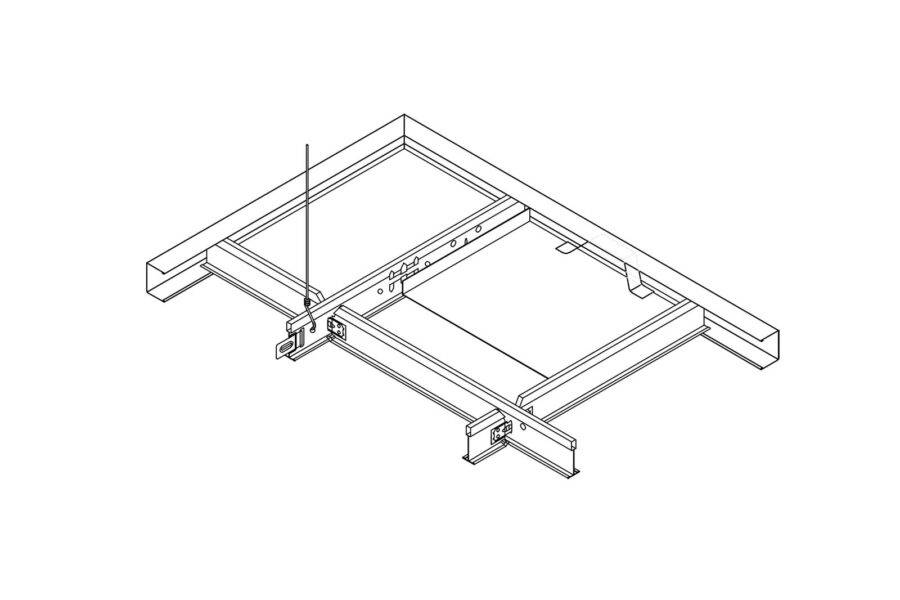
On China’s domestic market, the standard interlocking T-bar suspended ceiling grid is predominantly manufactured for mineral wool ceiling panels. Conventional Chinese T-bar grids feature built-in metal interlocking tongues at every cross tee end. These integrated tongues create tight joints between tees without extra ceiling connectors, simplifying local mineral wool suspended ceiling assembly.
For domestic aluminum ceiling panel projects in China, installers mostly select Omega triangular ceiling channels as the standard frame for clip-in aluminum ceiling systems, forming a mature local suspended ceiling matching scheme. T-bar grids are seldom adopted for aluminum panels within mainland China.
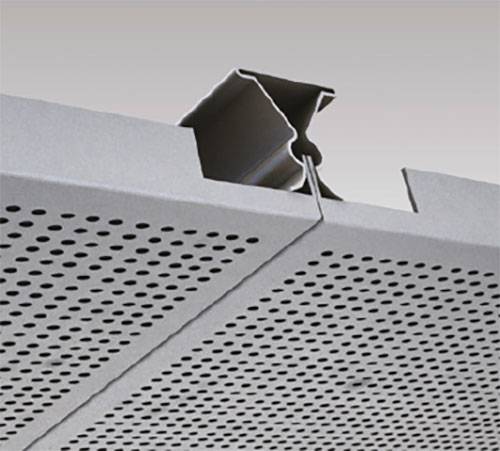
Unique Tongue-Less T-Bar Standards for Middle East Suspended Ceiling Systems
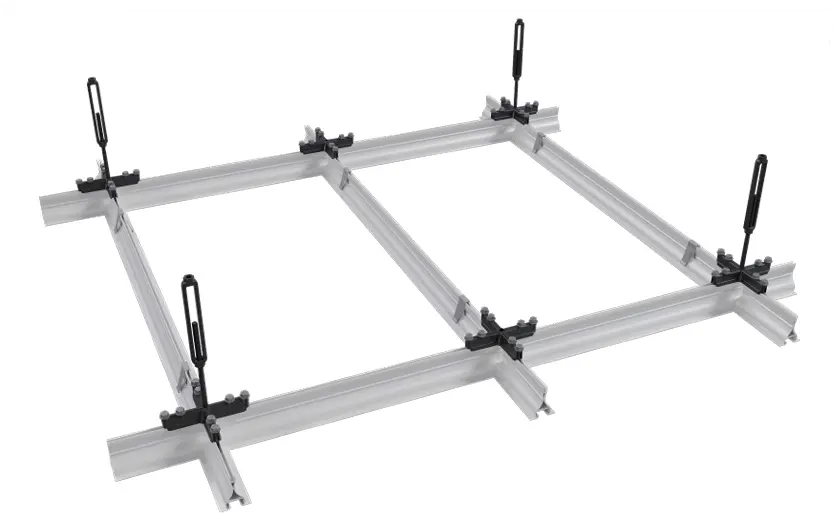
The Middle East follows distinct suspended ceiling system specifications. For most commercial projects across the Middle East, tongue-less T-bar ceiling grids are widely preferred for lay-in aluminum ceiling panels, and this T-bar grid configuration dominates regional aluminum suspended ceiling applications. It should be noted that concealed Omega-style systems can occasionally be encountered for special-design projects, though such cases remain relatively uncommon.
The defining feature of Middle East T-bar grids is the tongue-free design. Lacking interlocking metal tongues, individual T-bar sections cannot fasten together independently. This makes custom plastic top connectors essential T-bar grid accessories for the majority of suspended ceiling system builds in this region. These ceiling connectors come in 2-way, 3-way and 4-way styles with pre-drilled screw holes, securing intersecting T-bar pieces to build a rigid drop ceiling framework.
Beyond plastic top connectors, dedicated ceiling retaining clips are typical mandatory ceiling accessories. These clips lock aluminum ceiling panels firmly onto the T-bar grid, stopping panel shifting or detachment triggered by temperature swings and airflow, safeguarding the long term stability of the full suspended ceiling system.
Mixed Suspended Ceiling System Standards in ASEAN Southeast Asia Markets
For Southeast Asian ASEAN markets, suspended ceiling systems follow mixed specifications between Chinese domestic standards and international project requirements, with final solutions largely subject to project by project design requirements.
Most commercial projects in Singapore, Malaysia and Philippines adopt lay-in aluminum ceiling panels on T-bar grid. However, unlike Middle East tongueless T-bar grids, ASEAN-spec T-bar grids are normally manufactured with built-in metal interlocking tongues. Plastic top 2-way, 3-way, and 4-way connectors are rarely required, only specified for a small number of high-standard international tender projects.
When aluminum ceiling panels are laid on tongue type T-bar grids in ASEAN regions, retaining clips are often fitted as an extra safety fastener to hold panels stable against strong airflow and temperature changes, even though the lay-in panels can stay in place simply by gravity.
For Vietnam, Indonesia and Thailand, both Omega-shaped clip-in aluminum ceiling systems and tongue-type lay-in T-bar ceiling systems are widely applied, depending on project designers and investors. As a general rule, ASEAN countries tend to use tongue type T-bar grids with built-in metal interlocking structures; the Middle-Eastern tongue-less T-bar structure with special plastic top connectors is seldom specified locally.
Summary of Regional Suspended Ceiling System Differences
Misaligned T-bar grids and mismatched ceiling accessories rank among the top sourcing pitfalls for cross-border suspended ceiling system buyers.
China: Uses tongue-type T-bar grids mainly for mineral wool ceiling panels and adopts Omega channels for aluminum ceilings.
Middle East: Largely applies tongue-less T-bar grids for aluminum suspended ceiling systems, supported by professional plastic top connectors and fixing clips, while concealed Omega-based solutions may appear in occasional special projects.
ASEAN Markets: Implement mixed ceiling system standards. T-bar grids with metal tongues represent the mainstream, though project-specific exceptions still exist. Retaining clips are commonly added for lay-in aluminum panels to improve safety and stability.
Reliable ceiling suppliers must deliver customized suspended ceiling system packages tailored to each regional market’s unique demands.