Polyester Fiber for Fiber-Reinforced Concrete
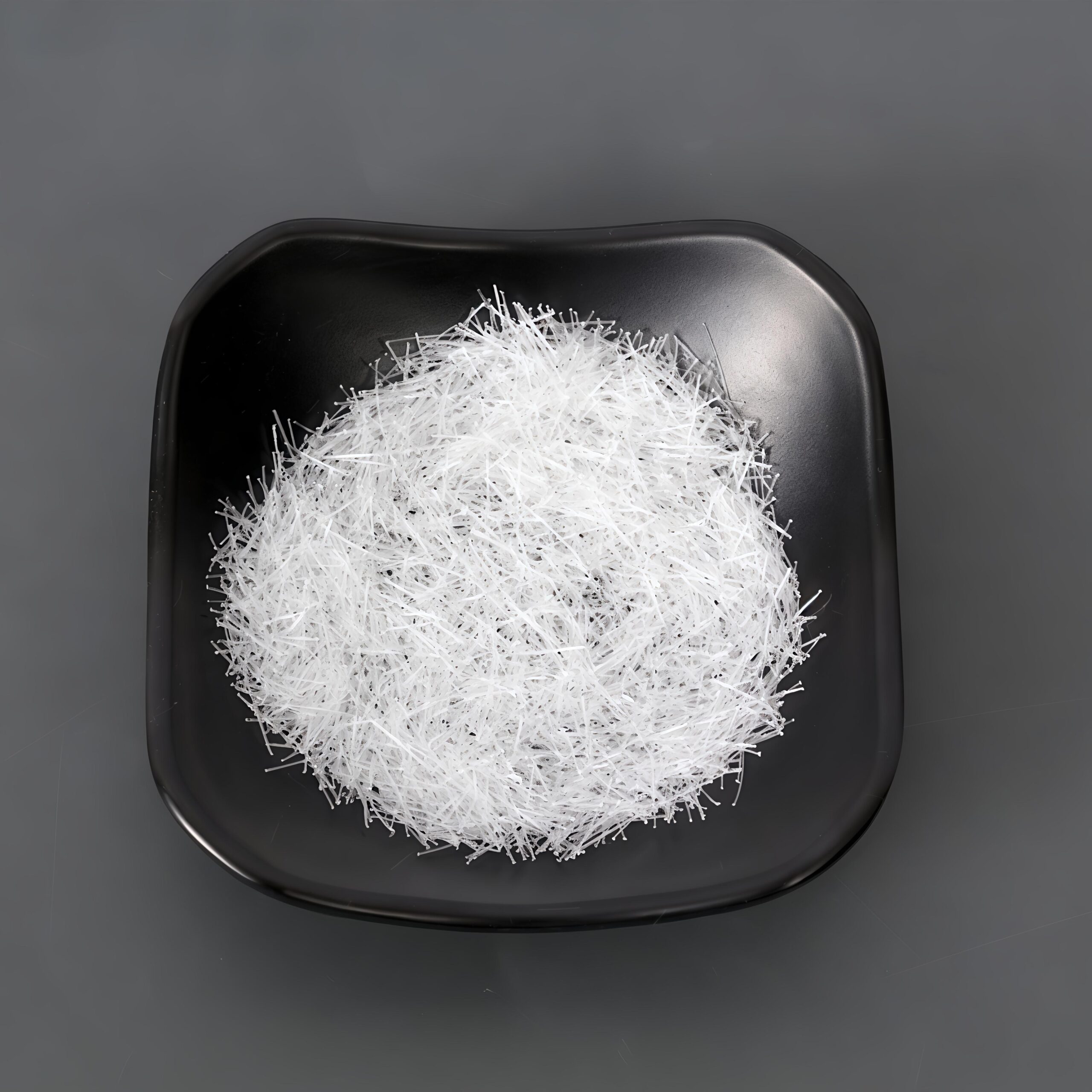
Fiber-reinforced concrete (FRC) refers to concrete mixed with fibrous materials to enhance its overall structural integrity. It consists of short, discrete fibers that are evenly distributed and randomly oriented inside the concrete matrix. Common reinforcing fibers cover steel fibers, glass fibers, synthetic fibers and natural fibers, each endowing concrete with unique mechanical properties. Furthermore, the comprehensive performance of fiber-reinforced concrete varies greatly depending on concrete types, fiber materials, fiber geometries, distribution modes, orientation and volume densities.
Historical Perspective
The application of fiber reinforcement in building materials is not a modern innovation, and fiber reinforcement technology has been adopted since ancient construction activities. In early construction practices, horsehair was added to mortar while straw was mixed into mud bricks for reinforcement. As construction technology developed in the 1900s, asbestos fibers were widely applied in concrete production. In the 1950s, composite material technology emerged rapidly, and fiber-reinforced concrete became one of the key research focuses in the construction industry. After the health hazards of asbestos were confirmed, the construction market urgently needed safe alternative reinforcing materials for concrete and other building products. Starting from the 1960s, steel fibers, glass fibers (GFRC) and synthetic fibers represented by polypropylene fibers were gradually put into practical concrete projects. Up to now, technical research and performance optimization of new-type fiber-reinforced concrete are still ongoing.
Core Functions of Concrete Fibers
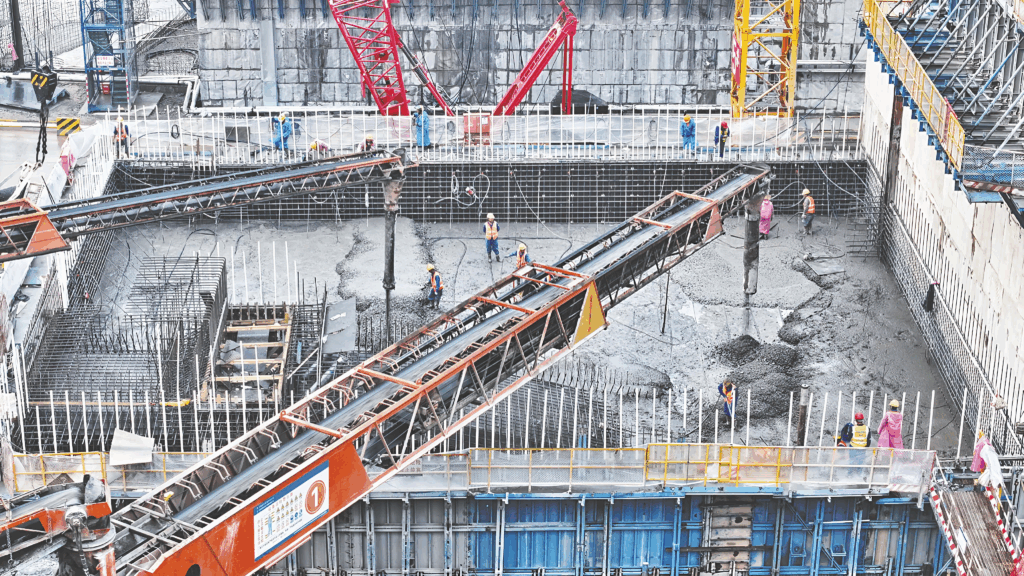
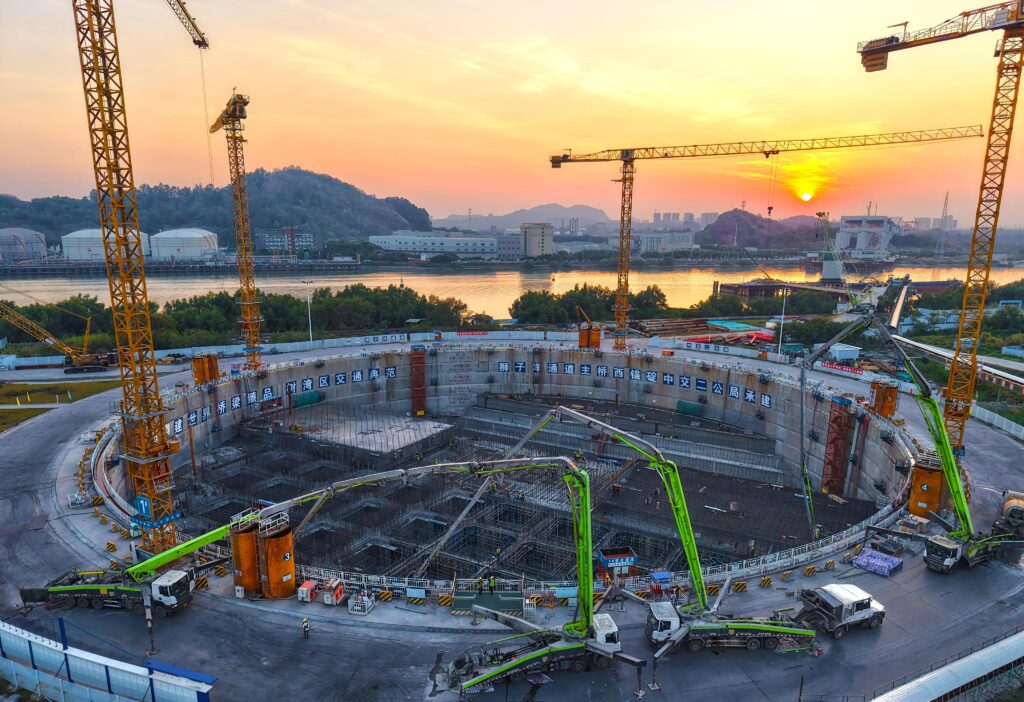
Fibers are primarily added to concrete to restrain cracks caused by plastic shrinkage and drying shrinkage during concrete curing. Meanwhile, fibers can reduce concrete permeability and inhibit surface water bleeding. Specific types of fibers can significantly improve concrete’s impact resistance, abrasion resistance and fracture resistance. In specific engineering scenarios, large-sized steel fibers or synthetic fibers can partially or completely replace traditional steel rebars. Fiber-reinforced concrete has largely replaced steel rebars in underground construction, especially tunnel lining segments, where most tunnel linings adopt fiber reinforcement instead of steel rebars. This wide application is largely attributed to the corrosion risk of traditional steel reinforcements, which is prominent in humid environments with long-term water erosion and repeated moisture exposure. Notably, certain types of fibers may reduce concrete compressive strength. For example, lignocellulosic fibers will degrade inside cement matrices due to the hydrolysis reaction of internal lignin and hemicellulose components.
Key Technical Parameters of Reinforcing Fibers
The fiber dosage in concrete mixtures is defined as volume fraction (Vf), namely the volume percentage of fibers accounting for the total volume of concrete-fiber composite materials, with a conventional application range from 0.1% to 3%. Another core indicator is fiber aspect ratio (l/d), calculated by dividing fiber length (l) by fiber diameter (d). For fibers with non-circular cross-sections, equivalent diameter is adopted for aspect ratio calculation. When fiber elastic modulus is higher than that of concrete or mortar matrix, fibers can bear partial structural loads and effectively improve concrete tensile strength. Generally, increasing fiber aspect ratio helps enhance concrete flexural strength and overall toughness. Longer fibers achieve better bonding effects with concrete matrices, while finer fibers provide more fiber distribution points inside concrete. To guarantee full reinforcement efficiency, fiber length shall be longer than the maximum particle size of concrete aggregates. For ordinary concrete with a maximum aggregate equivalent diameter of 19 mm, fibers longer than 20 mm can deliver optimal reinforcement performance. However, excessively long fibers without professional surface treatment will tangle into fiber balls during mixing, leading to poor concrete workability and construction difficulties.
Durability & Practical Engineering Case
Fibers are essential additives to improve the long-term durability of concrete structures. It is worth noting that both glass fibers and polyester fibers will degrade gradually under the high-alkaline environment inside concrete, so targeted additives and professional surface treatment are required to extend their service life.
A typical engineering application case is the High Speed 1 tunnel project. The tunnel lining concrete was mixed with polypropylene fibers at a dosage of 1 kg/m³ or above, with two fiber diameters of 18 μm and 32 μm. The fine-diameter polypropylene fibers not only strengthen the structural performance of tunnel linings, but also prevent concrete spalling and structural damage under accidental fire conditions.
Performance Benefits of Different Fiber Types
Glass Fibers
- Improve concrete comprehensive strength with low production cost
- Provide multi-directional tensile reinforcement, different from unidirectional limitation of steel rebars
- Present unique decorative effects with visible fibers on finished concrete surfaces
Polypropylene & Nylon Fibers
- Optimize concrete mix cohesion and improve long-distance pumping performance
- Enhance concrete freeze-thaw resistance
- Prevent explosive concrete spalling in case of severe fire disasters
- Boost concrete impact resistance and abrasion resistance
- Restrain plastic shrinkage cracks during concrete curing
- Upgrade overall structural strength and reduce matching steel rebar dosage
- Improve concrete ductility and control crack width precisely to extend structural durability
Steel Fibers
- Improve concrete structural bearing capacity
- Cut down the usage of traditional steel reinforcements
- Effectively control concrete crack width and improve long-term durability
- Strengthen concrete impact resistance, abrasion resistance and freeze-thaw resistance
Natural Lignocellulosic (LC) Fibers
- Improve concrete ductility and realize crack bridging effect to restrain crack expansion
- Lower global warming potential and reduce environmental footprint of construction materials
- Lighten the overall weight of concrete structures
- Note: Plant-based lignocellulosic fibers are prone to degradation inside cement matrices
Blended fiber solutions combining steel fibers and polymer fibers are widely adopted in modern construction projects to integrate complementary advantages. Steel fibers deliver outstanding structural reinforcement, while polymer fibers offer excellent resistance to explosive spalling and effective plastic shrinkage control for concrete structures.
Rebar Replacement Application
Under specific engineering conditions, steel fibers and macro synthetic fibers can completely replace conventional steel reinforcement bars (rebar) in reinforced concrete structures. This replacement solution is prevalently applied to industrial floor slabs and various precast concrete components. All fiber-reinforced concrete structures require standardized laboratory tests to verify compliance with design performance standards. Meanwhile, designers must abide by local building design codes, which often specify the minimum steel reinforcement dosage for concrete structures. Currently, a growing number of tunnel projects adopt precast lining segments solely reinforced with steel fibers. In addition, newly tested and approved micro-rebar can substitute traditional steel reinforcements for vertical wall structures complying with ACI 318 Chapter 14 design codes.
Latest Industry Developments & Research Progress
More than half of concrete volume in conventional building components serves solely to protect internal steel rebars from corrosion. Fully fiber-reinforced concrete cuts overall concrete consumption and reduces relevant greenhouse gas emissions. Moreover, FRC features flexible moldability for diverse custom shapes, granting architects and civil engineers greater design freedom.
High-performance fiber-reinforced concrete (HPFRC) supports sustained strain-hardening under multi-percent tensile strain, offering ductility two orders of magnitude higher than ordinary concrete and conventional FRC. It also possesses superior crack control performance: when stressed beyond the elastic limit, HPFRC restricts crack width within 100 μm even under large tensile deformation. Nevertheless, field cooperation tests conducted with the Michigan Department of Transportation still recorded early-age cracking issues of HPFRC structures.
Latest bridge deck research indicates that fiber additives provide stable residual strength and reliable crack control for concrete. Although FRC exhibits slightly higher shrinkage rates than ordinary concrete reference samples, it develops far fewer and narrower cracks. In general, the residual strength of fiber-reinforced concrete is positively correlated with internal fiber dosage.
Natural fiber reinforcement has attracted widespread research attention thanks to its eco-friendly properties, recyclability and cost-effectiveness. However, inherent degradation of natural fibers within alkaline cement matrices remains a key technical bottleneck limiting its large-scale engineering promotion.
Recycled waste fibers have also been studied as sustainable concrete reinforcing materials for circular construction. Typical waste carpet fibers are ideal recycled reinforcing materials: standard carpets consist of double polypropylene backing layers, calcium carbonate-filled styrene-butadiene latex rubber (SBR) adhesive layers, and surface pile fibers dominated by nylon 6 and nylon 66 textured yarns. Both recycled polypropylene and nylon fibers can be reused for concrete reinforcement. Besides, recycled polyethylene terephthalate (PET) fibers are also emerging as a new low-carbon reinforcing fiber option for modern concrete projects.