Water Reducer Agent refers to professional concrete chemical admixtures added to fresh concrete mixtures before pouring, belonging to the same functional admixture category as concrete retarders. The first-generation water reducer agent adopted lignosulfonates, which have been widely applied in concrete construction since the 1930s. These cost-effective raw materials were originally extracted from by-products of the wood and paper manufacturing industry. Nowadays, traditional lignosulfonate water reducers are gradually replaced by high-performance synthetic sulfonate and polycarboxylate-based water reducer agent, commonly known as concrete superplasticizers for modern construction projects.
Professional water reducer agent brings multiple core performance advantages to concrete construction, covering both onsite construction efficiency and long-term concrete durability:
- Cut total mixing water dosage of concrete by 5% to 10% effectively;
- Reduce internal concrete porosity significantly after hardening;
- Boost ultimate concrete compressive strength by up to 25%, thanks to the optimized low water-cement ratio while maintaining stable concrete workability;
- Improve fresh concrete workability and fluidity with fixed free water content;
- Lower concrete water permeability and prevent external moisture penetration;
- Restrain the diffusion of harmful aggressive substances inside concrete, so as to extend overall concrete service life and enhance structural durability;
- Deliver smoother and finer finished surfaces for concrete structures.
Superplasticizers (SPs), also defined as high-range water reducer agent, are premium concrete additives specially developed for high-strength concrete production and self-compacting concrete placement. Standard common plasticizers can reduce concrete water content by around 15%, while high-performance superplasticizer water reducer agent can cut water consumption by 30% or even higher. Such concrete admixtures are only required with a low dosage based on concrete total weight. Both regular plasticizers and superplasticizer water reducer agent can moderately delay concrete setting time and hardening progress, fitting staged construction requirements for large-scale infrastructure projects.
Based on different dispersion principles and working mechanisms, commercial superplasticizer water reducer agent can be classified into two mainstream generations:
- Electrostatic repulsion (first & second generation): Including traditional lignosulfonate (the earliest original water reducer agent), sulfonated naphthalene formaldehyde condensates and sulfonated melamine formaldehyde condensates, which rely on electrostatic repulsion to separate cement particle agglomerations;
- Steric hindrance effect (third generation): Polycarboxylate Ether (PCE) water reducer agent with independent branched molecular chains, representing the latest high-performance concrete admixture technology.
Superplasticizer water reducer agent is essential construction chemicals when uniform and well-dispersed cement particle suspension is required to optimize concrete rheological properties. Adding qualified water reducer agent helps minimize the water-to-cement ratio of concrete and mortar without damaging original fresh concrete workability. This core function supports the mass production of self-consolidating concrete and high-performance concrete. The water-cement ratio is the decisive factor affecting final concrete structural strength and long-term durability. A lower water-cement ratio enabled by water reducer agent reduces hardened concrete internal porosity, improves concrete compression resistance fundamentally, and avoids excessive free water added only for temporary construction fluidity demands.
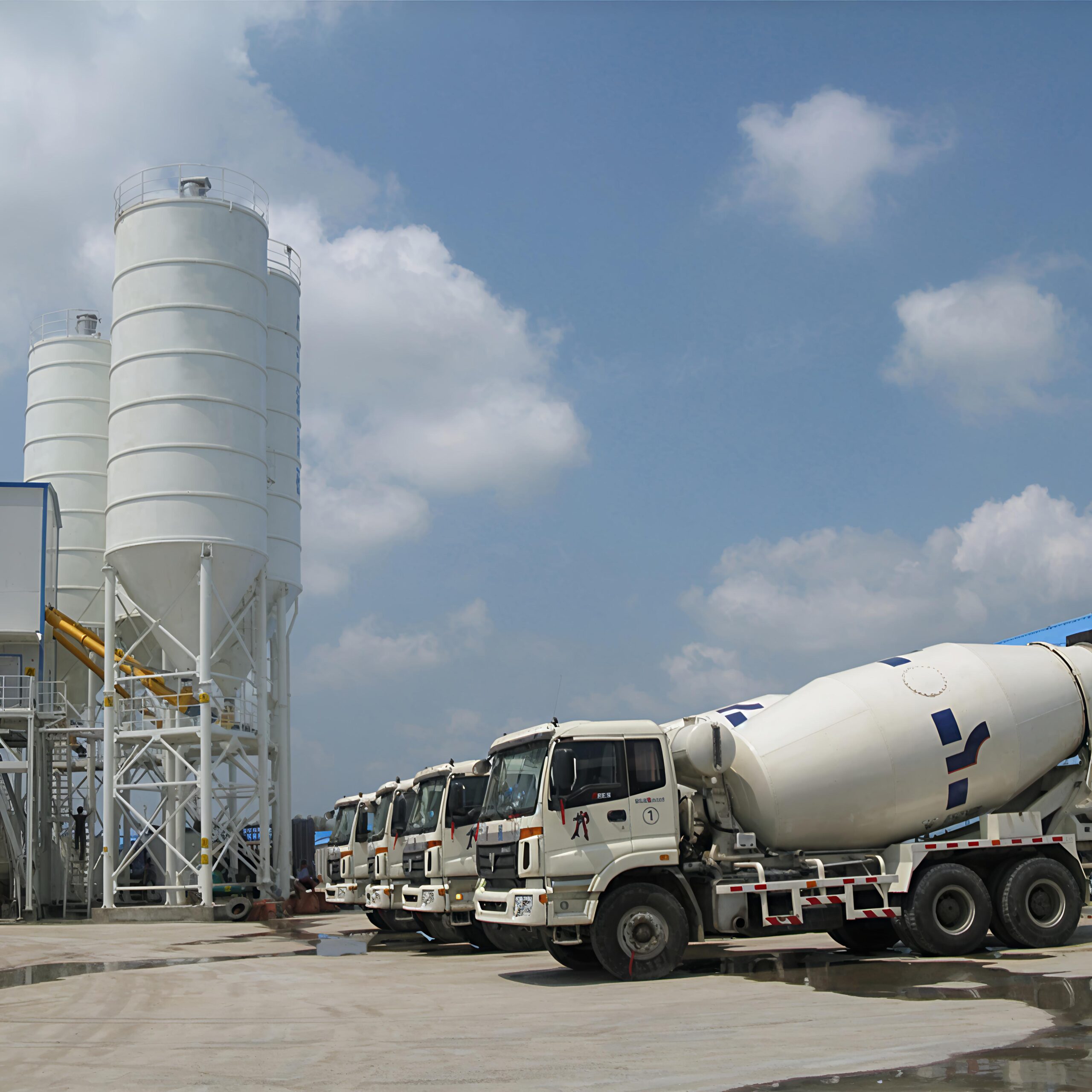
Transit concrete slump retention via real-time water reducer agent addition inside concrete mixer trucks is a mature and modern construction solution. Combined with automatic onsite slump monitoring systems, supplementary water reducer agent can stabilize fresh concrete fluidity during transportation and keep qualified concrete performance before pouring, without sacrificing final concrete structural quality.
Working Mechanism of Water Reducer Agent & Superplasticizer
Phosphonic acid-terminated polyether materials are high-efficiency raw materials for manufacturing premium water reducer agent. Traditional ordinary plasticizers are mainly sodium lignosulfonate salts, while all superplasticizer products belong to artificially synthesized functional polymers.
Main commercial superplasticizer raw materials cover sulfonated naphthalene formaldehyde condensate, sulfonated melamine formaldehyde condensate, acetone formaldehyde condensate and polycarboxylate ether polymers. Two typical cross-linked polymer products are widely used in global construction admixture markets: Polymelamine Sulfonate (PMS) and Polynaphthalene Sulfonate (PNS), manufactured by cross-linking sulfonated monomers with formaldehyde or secondary sulfonation of finished cross-linked polymers.
Different from electrostatic-type water reducer agent, Polycarboxylate Ether (PCE) superplasticizer stabilizes cement colloidal suspension via steric hindrance effect from its unique branched molecular chains. PCE polymer molecules will be firmly adsorbed on positively charged cement mineral particles, especially the tricalcium aluminate (C3A) phase inside cement raw materials.
All plasticizer and superplasticizer water reducer agent have typical surfactant properties, most of which are negative ionomers with sulfonate, carboxylate or phosphonate functional groups. They act as high-efficiency dispersants to prevent concrete component segregation, avoiding separation between cement slurry, free water and coarse/fine aggregates including sand and gravel. The negatively charged polymer molecular chains adsorb onto positively charged colloidal cement particles to eliminate cement agglomeration.
To be specific, naphthalene sulfonate (PNS) and melamine sulfonate (PMS) water reducer agent work mainly through electrostatic repulsion to disperse clustered cement particles. By contrast, polycarboxylate ether water reducer agent wraps cement particle agglomerations directly and disperses large cement clusters into fine individual particles via steric hindrance of side molecular chains. In practical construction scenarios, occasional incompatibility between cement types and superplasticizer water reducer agent still exists, as partial reaction mechanisms of customized admixtures remain under further industry research.
Main Commercial Types of Superplasticizer Water Reducer Agent
Two mainstream water reducer agent products dominate global construction chemical markets: Sulfonated Naphthalene Formaldehyde Water Reducer and Polycarboxylate Superplasticizer (PCE). As the most popular third-generation water reducer agent, polycarboxylate superplasticizer optimizes concrete fluidity without extra water addition. It supports low water-cement ratio design for high-strength concrete and high-performance mortar. Besides excellent water reduction performance, PCE water reducer agent also effectively accelerates early-stage strength development of hardened concrete and mortar for fast-track construction projects.